India Now Has 88 e-Visa Entry Points: New Airports and Land Ports Explained
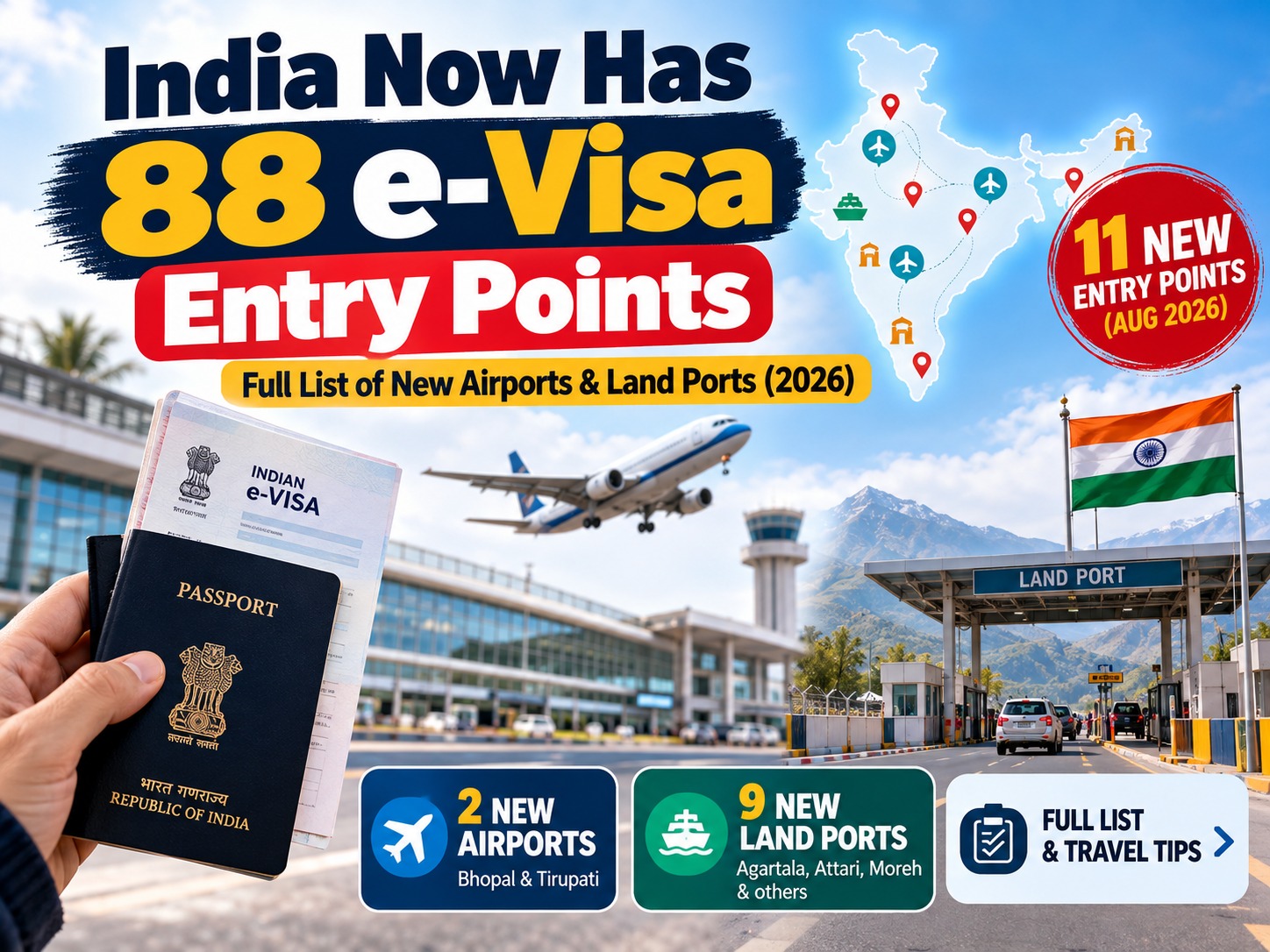
If you hold an Indian e-Visa, you can't simply arrive anywhere. Your e-Visa is valid only at designated ports, and that list just got longer. India added 11 new entry points for e-Visa holders from 10 August 2026, including Bhopal and Tirupati airports and nine land ports.
For travellers, that means more flexibility, especially for those heading to central India, pilgrimage destinations and the Northeast. Here is what changed, what it means for your trip, and what to check before you book flights.
What Changed in August 2026?
The Ministry of Home Affairs notified 11 more entry points, made up of nine land ports and two airports. The total rose from 77 to 88.
The 88 designated points now comprise 37 airports, 38 seaports and 13 land ports. The e-Visa is already the main route into the country. It accounts for 78 per cent of all visas India issues.
The Two New Airports
Bhopal. The capital of Madhya Pradesh sits close to some of India's best heritage sites, including the Buddhist stupas at Sanchi. Until now, most visitors heading to central India routed through Delhi or Mumbai first. Direct e-Visa access can shorten those journeys.
Tirupati. One of India's most visited pilgrimage destinations, home to the famous Venkateswara temple at Tirumala. Faith tourism, medical travel and business trips in southern Andhra Pradesh should all benefit from the new listing.
The Nine New Land Ports
The new land ports are Agartala, Darranga, Gede, Ghojadanga, Haridaspur, Jaigaon, Dawki, Moreh and Attari (Road).
Broadly, these sit along India's borders with Bangladesh, Bhutan, Myanmar and Pakistan:
- Agartala (Tripura), Dawki (Meghalaya), Ghojadanga, Haridaspur and Gede (West Bengal) are generally associated with the Bangladesh border.
- Jaigaon (West Bengal) and Darranga (Assam) connect India with Bhutan.
- Moreh (Manipur) is the gateway to Myanmar.
- Attari (Punjab) sits on the Pakistan border.
Treat this as orientation rather than a travel plan. Land crossings differ from airports in important ways: opening hours, which nationalities and visa types are handled, transport connections and security checks can all vary by crossing. Check the official notification and the port's current rules before you commit to an overland route.
Earlier Guidance Might Be Outdated
If you read a 2025 or early-2026 guide, it may tell you e-Tourist visas can't be used at land borders. For example, one earlier overview said e-Tourist visas allowed no land border entry and listed 33 airports and nine seaports. The August 2026 update changes that picture. Always check the date on any guide, including this one, and confirm against the government's current list.
Why More Entry Points Matter
- Less backtracking. Travellers exploring the Northeast can now think about crossing overland from a neighbouring country rather than flying into a metro first.
- Regional tourism. Smaller airports and border towns gain visibility, which supports local businesses, guides and homestays.
- Business flexibility. Companies with plants or clients in central and southern India can reduce transit time for visiting teams.
- Cruise and sea travel. With 38 seaports on the list, cruise passengers and sea arrivals also have a wide choice.
What to Check Before You Travel
- Confirm your entry point is on the current list. Not every international airport or border crossing accepts an e-Visa. Don't assume a major-sounding airport qualifies.
- Match your entry point to your itinerary. Travellers using an e-Visa must enter India through the authorized entry points.
- Allow enough time to apply. Official guidance says to apply at least four days before travel. In practice, longer is safer. The official portal notes a minimum of three working days for processing, which can stretch depending on nationality, verification and workload.
- Don't forget the e-Arrival Card. It's a separate step, filed within 72 hours of arrival. See our guide to the India e-Arrival Card.
- Check permits for sensitive regions. Some Northeastern and border regions require additional permits for foreign visitors, regardless of your visa. Research this early, because it can change your route.
- Know your visa's rules. For tourists, the visa type and stay limits matter. The e-Tourist visa is still non-extendable and non-convertible.
Airport, Seaport or Land Border: How to Choose
Airports remain the simplest option for most visitors. Flight schedules are predictable, immigration desks are staffed for international arrivals, and onward transport is easy to arrange. If you have a choice, an airport is usually the lowest-risk way to enter on an e-Visa.
Seaports suit cruise passengers and travellers arriving on ships. Sailing schedules change with weather and operator decisions, so keep your visa dates flexible and confirm the port call in advance.
Land ports offer the most adventurous routes, but they need the most planning. Confirm opening times, transport on both sides of the border, and whether your nationality and visa category are handled at that specific crossing. Carry printed copies of your e-Visa and e-Arrival Card confirmation, and allow extra time for checks.
Sample Trips the New Ports Make Easier
- Heritage loop in central India: Fly into Bhopal, visit Sanchi and Bhimbetka, and continue to Khajuraho or Orchha.
- Pilgrimage and coast in the south: Arrive at Tirupati, then continue to Chennai or Bengaluru.
- Northeast circuit: Combine Meghalaya's living-root bridges and river areas with Assam and Tripura, checking permits and the border crossing's current rules first.
- Himalayan foothills route: Explore the Bhutan-India border region of Assam and West Bengal, then head to the tea estates and hill stations.
Frequently Asked Questions
How many e-Visa entry points does India have now?
There are 88 designated points: 37 airports, 38 seaports and 13 land ports.
Which airports were added?
Bhopal and Tirupati.
Can I use any of the new land ports with any e-Visa category?
Not necessarily. Land crossings can have specific conditions, so confirm with the official portal or the port's immigration authority before relying on one.
Does the e-Visa let me leave through any port?
Entry and exit rules differ. Check the exit requirements for your visa type and the port you plan to use.
Do I still need the e-Arrival Card if I arrive overland?
Requirements can differ between air, sea and land arrivals. Check the official portal for your specific arrival mode.
Final Thoughts
India's e-Visa network has grown to 88 entry points, giving travellers more options than ever. But more options mean more rules to check. Confirm your port is listed, apply with time to spare, and keep your paperwork consistent.
Not sure which entry point suits your itinerary? indianvisaonline.com can help you match your e-Visa to your route before you book.


