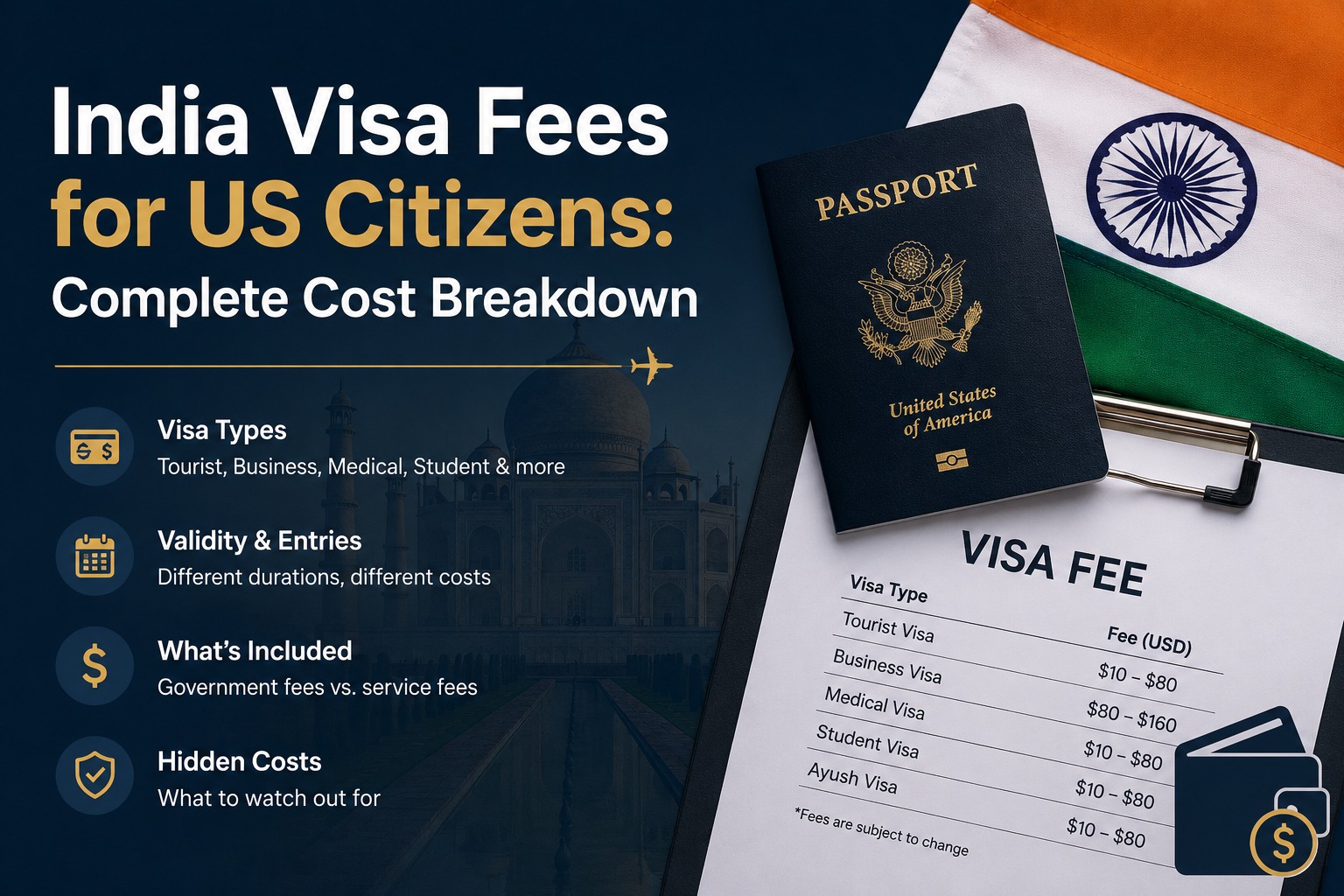
India Visa Fees for US Citizens: Complete Cost Breakdown
Cost is one of the first questions travelers ask once they've settled on a visa category — and it's also one of the most confusing to research, because pricing gets presented differently across government sites, third-party services, and outdated blog posts. Here's a clear breakdown of what actually goes into the cost of an India visa for US citizens, and where the confusion usually comes from.
Why "How Much Does an India Visa Cost?" Doesn't Have One Answer
Unlike a flat processing fee you'd pay for a passport renewal, India visa costs vary based on several
factors:
Visa category — Tourist, Business, Medical, Student, and Ayush visas each carry different
fee structures.
Visa duration/validity — Longer validity options (30-day vs. 1-year vs. 5-year Tourist e-
Visas, for example) are priced differently.
Number of entries — Single-entry visas are typically priced lower than multiple-entry
options.
Where you apply — Government e-Visa fees differ from what you'd pay applying in
person through certain consulate pathways.
Service fees — If you use a visa assistance service to help review your application, that's a
separate cost from the government fee itself.
What's Included in the Government Visa Fee
The core government fee covers the processing and review of your application by Indian
immigration authorities. This is a mandatory cost regardless of how you apply — whether directly
through the government portal or with help from a third-party service. No legitimate assistance
service can waive or reduce this government fee; it's set by Indian authorities, not by any private
company.
What a Visa Assistance Service Fee Covers (and Doesn't)
If you choose to use a paid assistance service instead of applying entirely on your own, that fee is
typically for:
Reviewing your application and documents for common errors before submission
Confirming you've selected the correct visa category for your purpose of travel
Checking your photo against India's specific formatting requirements
Providing support if you have questions during the process
It's worth being clear-eyed about what this fee does not buy you: it doesn't guarantee approval, and
it doesn't speed up government processing beyond what a clean, correctly submitted application
would already achieve on its own. Any service implying otherwise is overselling what it can
actually control.
Watch Out for These Hidden or Inflated Costs
Duplicate government fee charges. Some third-party sites bundle the government fee into
a much larger "package price" without clearly breaking out what portion goes to the
government versus the service itself.
Unnecessary "express" upsells. As covered in our guide to visa processing times, no
private service can guarantee faster government review — be cautious of add-on fees sold as
guaranteed expediting.
Photo or document "correction" fees. If a service charges extra every time you need to fix
a photo or document, that's worth factoring into whether the total cost is actually reasonable.
Currency conversion markups. If you're paying in USD for a fee quoted in INR (or vice
versa), check whether the conversion rate applied is close to market rate or padded with a
hidden markup.
Does Visa Cost Vary by Trip Length?
For Tourist e-Visas, yes — the validity period you choose (shorter vs. longer options) generally
affects the fee, since you're essentially paying for a longer window of permitted entry, not just a
longer individual stay. It's worth choosing the validity option that actually matches your travel plans
rather than defaulting to the longest one "just in case," since that usually means paying more than
necessary.
Are There Ways to Reduce Your Costs?
The most reliable way to keep your total cost down isn't chasing a discount — it's avoiding the costs
that come from mistakes:
1. Get your category right the first time. Applying under the wrong category and needing to
reapply means paying the fee twice.
2. Get your photo right the first time. Resubmission fees or delays tied to photo issues are
avoidable with a careful first attempt.
3. Choose the validity/entry option that matches your actual trip, not the most expensive
"just to be safe" option.
4. Apply directly if you're comfortable doing so. If you're confident navigating the process
yourself, you can skip service fees entirely and pay only the government fee.
Frequently Asked Questions
Is the India visa fee refundable if my application is rejected? Generally, government processing
fees are non-refundable regardless of outcome, which is another reason getting your application
right the first time matters.
Do children pay the same visa fee as adults? Fee structures for minors can differ by category, so
it's worth checking the specific fee schedule for your visa type rather than assuming a flat discount
applies.
Are there different fees for single-entry vs. multiple-entry visas? Yes, typically. Multiple-entry
visas usually carry a higher fee than single-entry options within the same category.
Can I pay in US dollars? Most application portals and services quote fees that can be paid in USD,
though it's worth confirming the exact payment method, accepted cards, and any currency
conversion terms before you pay, since these details can vary between providers.
The Bottom Line
India visa costs aren't complicated once you understand the pieces: a mandatory government fee
that varies by category and validity, plus an optional service fee if you choose assistance. The
biggest cost risk isn't the fee itself — it's paying it twice because of an avoidable mistake. A careful,
accurate application the first time is still the most reliable way to keep your total cost predictable.
Not sure which visa category or validity option fits your trip? A quick review before you apply can
help you avoid paying for the wrong one.


