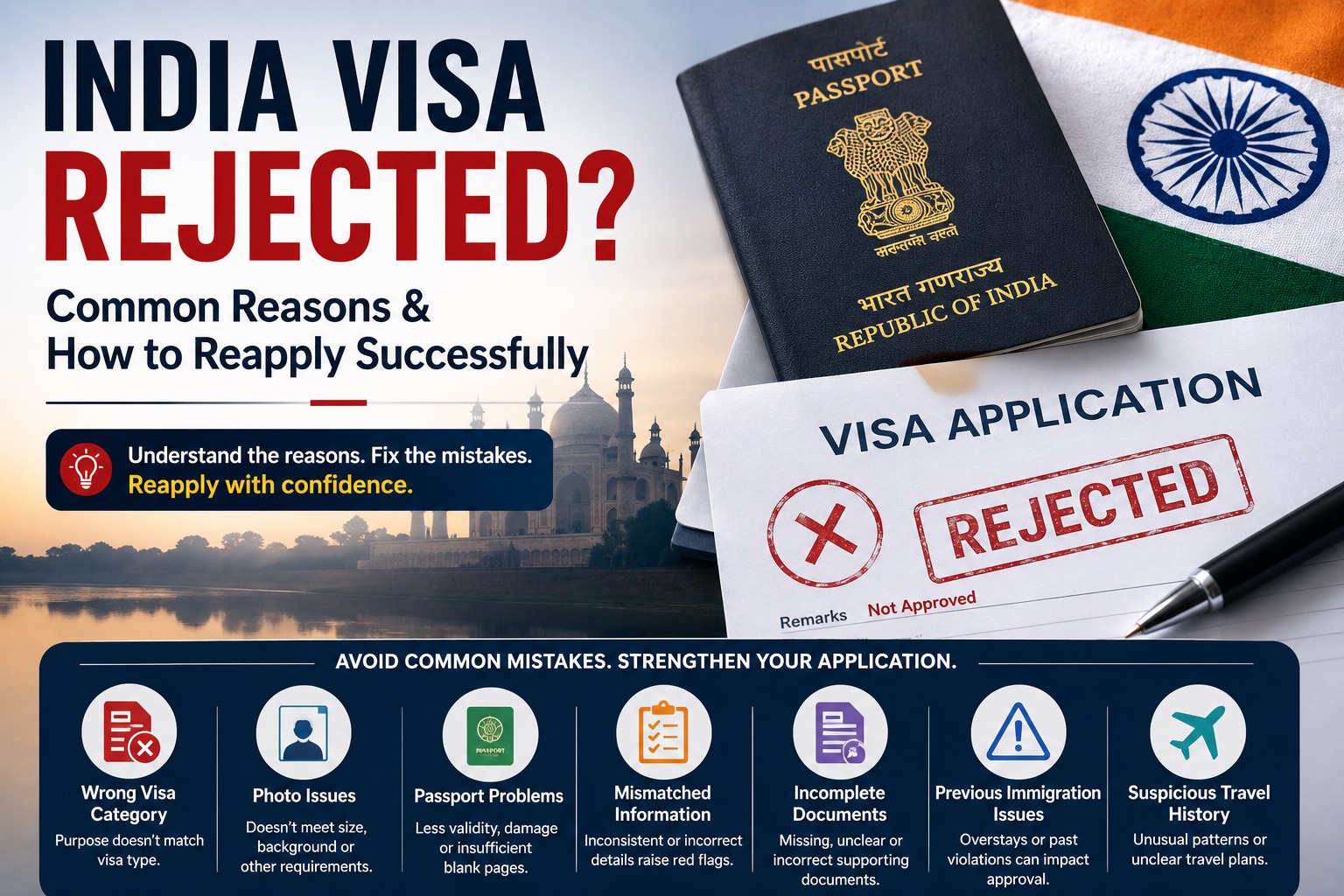
India Visa Rejected? Common Reasons & How to Reapply Successfully
Getting a rejection notice on an India visa application is frustrating, especially if you're working
against a travel deadline. The good news is that most rejections trace back to a small, identifiable
set of causes — and understanding what actually went wrong is the fastest way to get your
reapplication approved instead of repeating the same mistake.
Here's a practical breakdown of why India visa applications get rejected, and how to reapply the
right way.
Rejection vs. a Request for Clarification
Before assuming the worst, it's worth understanding that not every issue with your application is an
outright rejection. Sometimes Indian immigration authorities will request additional information or
a corrected document rather than deny the application entirely. A true rejection means your
application, as submitted, was not approved — and in most cases, you're able to submit a new
application addressing whatever caused the issue.
The Most Common Reasons India Visa Applications Get Rejected
1. Applying Under the Wrong Visa Category
This is one of the most frequent causes. If your stated purpose of travel doesn't match your
supporting documents — for example, applying as Tourist for what's actually a business trip with a
company invitation letter — it raises a red flag during review. Purpose and category need to align
clearly.
2. Photo That Doesn't Meet Specifications
India's visa photo requirements are specific about size, background, framing, and recency. A photo
with a non-white or patterned background, incorrect dimensions, glasses glare, or an outdated image
is a common and entirely avoidable rejection cause.
3. Passport Issues
A passport with less than six months of validity remaining from your arrival date, insufficient blank
pages, or damage to the passport itself can all lead to rejection. This is worth checking before you
even start your application.
4. Mismatched or Inconsistent Information
If details on your application — your name, passport number, dates of birth — don't match exactly
what's on your passport or supporting documents, it creates inconsistencies that reviewers flag.
Even small typos matter here.
5. Incomplete or Unclear Supporting Documents
Business invitation letters, hospital letters, or admission letters that are missing required details,
unsigned, undated, or vague about purpose are a common cause of rejection, particularly for
Business, Medical, and Student visa categories.
6. Previous Immigration Issues
If you have a history of overstaying a previous visa, or other immigration-related issues on record,
this can affect the outcome of a new application. This is a more complex situation that often
benefits from a more thorough, carefully documented reapplication.
7. Suspicious or Inconsistent Travel History
Applications that raise questions based on unusual travel patterns, unclear funding sources for the
trip, or inconsistencies between your stated itinerary and your application details can also trigger a
rejection or request for more information.
What to Do Immediately After a Rejection
1. Read the rejection reason carefully, if one is provided. Understanding the specific cause is
far more useful than guessing.
2. Don't immediately resubmit the exact same application. Reapplying without addressing
the underlying issue almost always leads to the same outcome.
3. Gather corrected documentation for whatever was flagged — a new photo, an updated
supporting letter, or corrected personal details.
4. Double-check every other part of your application too, not just the flagged issue, since a
second rejection due to an unrelated overlooked error is an avoidable setback.
How to Strengthen a Reapplication
Confirm your category is genuinely correct for your purpose of travel, not just
resubmitting the same category with corrected documents.
Get a fresh photo taken that clearly meets India's specifications, rather than reusing or
lightly editing the one that was flagged.
Have supporting letters reissued with complete, current, and specific details — vague
language is a common culprit.
Review your entire application line by line against your passport before resubmitting,
rather than only fixing the one section you think caused the issue.
Consider a second set of eyes. A fresh review from someone other than yourself often
catches small inconsistencies you've become blind to after looking at the same form
repeatedly.
Does a Rejection Affect Future Applications?
A single rejection due to a straightforward, fixable issue — like a photo error or a category
mismatch — generally doesn't create lasting problems for future applications, once corrected.
Rejections tied to more serious concerns, like past immigration violations, are a different situation
and may benefit from more careful preparation or, in complex cases, professional guidance before
reapplying.
How Long Should You Wait Before Reapplying?
There's typically no mandatory waiting period for most straightforward rejections — you can
generally reapply once you've corrected the underlying issue. That said, rushing a reapplication
without actually fixing what went wrong wastes time rather than saving it. It's worth taking the time
to get the corrected application right before resubmitting, even if that means a short delay.
Frequently Asked Questions
Will I get a refund if my visa is rejected? Government processing fees are generally non-
refundable regardless of outcome, which is part of why getting the application right matters so
much.
Can I appeal a rejection instead of reapplying? In most cases, submitting a new, corrected
application is the standard path forward rather than a formal appeal process.
Does a rejection show up on future visa applications? Immigration authorities may have access
to your application history, so it's generally better to address the root cause clearly in your
reapplication rather than hope it goes unnoticed.
Should I use an assistance service after a rejection? If your first attempt was submitted without a careful review and resulted in rejection, having a second, more thorough review before reapplying can help catch what was missed the first time.
The Bottom Line
An India visa rejection is frustrating, but it's rarely the end of the road. Most rejections come down
to identifiable, fixable issues — the wrong category, a non-compliant photo, mismatched details, or
incomplete supporting documents. Understanding exactly what went wrong, correcting it
thoroughly, and reviewing the rest of your application carefully before resubmitting gives your
reapplication a much stronger chance of success.
Had an application rejected or flagged? A careful review before you resubmit can help make sure it
doesn't happen twice.


